
Generative AI-Powered Logistics AI Agents: Redefining Employee-Driven Delivery Experiences for the Digital Commerce Era


Logistics AI Agent


Logistics has always been a people-driven business. Behind every successful delivery is a dispatcher coordinating routes, a customer support agent answering queries, a driver navigating traffic, and an operations manager balancing cost, speed, and customer expectations. Yet over the past decade, the delivery landscape has changed faster than human-led systems alone can manage.
E-commerce growth, same-day and next-day delivery promises, cross-border shipping, and rising customer expectations have placed unprecedented pressure on logistics employees. What once worked with phone calls, spreadsheets, and siloed systems now struggles to keep pace. This is where Artificial Intelligence — and more specifically, Generative AI — is reshaping the very foundation of logistics and delivery operations.
 Can I change my delivery address?
 What should I do if I miss my delivery?
 Can you reschedule my delivery?
 Is signature required for my delivery?
 Where is my package right now?
 Why hasn’t my package moved yet?
 Can I change the delivery time?
 Is my order shipped already?
 How do I contact the delivery driver?
 Why is my delivery delayed?
 What is the estimated delivery time today?
The Botbazaar Webpage – Logistics – Delivery – Employee solution represents a new class of enterprise intelligence: AI-powered logistics agents designed not to replace employees, but to work alongside them. These agents act as digital copilots, supporting delivery staff, dispatchers, customer service teams, and managers in real time. The result is a delivery operation that feels faster, calmer, more consistent, and more human — even at scale.
Generative AI brings something fundamentally new to logistics. It understands context, learns patterns, communicates naturally, and adapts continuously. For delivery employees, this means fewer repetitive tasks, clearer decisions, faster responses, and better customer interactions. In a world where delivery experience defines brand loyalty, empowering employees with intelligence is no longer optional — it is essential.
Reimagining Delivery Operations with Generative AI-Powered Logistics Agents for Employees
For decades, logistics organizations have invested heavily in systems — Transportation Management Systems (TMS), Warehouse Management Systems (WMS), fleet telematics, and CRM platforms. Yet employees are often left stitching these tools together manually.
Dispatchers toggle between screens. Support agents search for shipment status across systems. Drivers call back offices for updates. The friction adds up quickly.
Delivery employees today face a familiar set of challenges:

Manual booking and dispatch coordination that consumes hours each day

Slow responses to customer inquiries during peak delivery windows

Inconsistent execution across regions, teams, and channels

Failed or delayed deliveries due to miscommunication

Employee burnout caused by constant firefighting

Fragmented tools that do not speak to each other

Limited multilingual support in global or regional operations
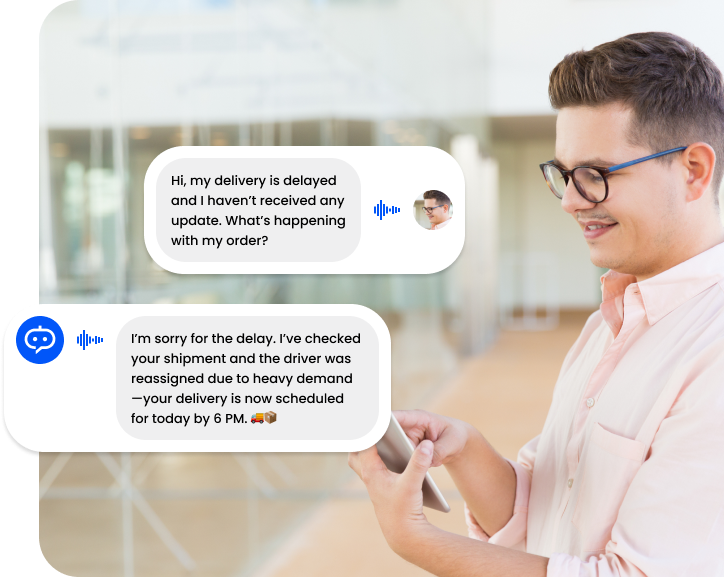
Generative AI-powered logistics agents change this operating model entirely.
A logistics employee AI agent sits at the center of delivery operations, connected directly to TMS, WMS, CRM, ERP, and telematics systems. It listens, understands, and acts — supporting employees across every stage of the delivery lifecycle. Instead of employees chasing information, the AI agent brings insights to them, in plain language, at the right moment.

Logistics AI Agent


For dispatchers, the AI agent suggests optimized routes, flags potential delays, and proposes proactive rescheduling.
For customer service teams, it instantly answers shipment questions, updates delivery instructions, and communicates clearly with customers across channels.
For drivers, it provides real-time guidance, voice-enabled assistance, and instant access to delivery details.
For managers, it delivers live visibility, performance insights, and exception alerts without manual reporting.
This is not automation for automation’s sake. It is intelligent assistance designed around how delivery employees actually work — fast, dynamic, and under constant pressure.
Did You Know? The Impact of AI Agents on Logistics & Delivery Workforce Performance
AI adoption in logistics is no longer experimental. Its impact on employee performance and operational outcomes is measurable and proven:
40%
Logistics teams using AI agents report up to 40% reduction in manual workload for dispatch and customer support roles
30-50%
AI-assisted delivery operations see 30–50% faster response times to shipment inquiries
20-25%
Failed deliveries drop by 20–25% when AI proactively manages address validation and rescheduling
15-20%
On-time delivery performance improves by 15–20% through predictive routing and exception handling
These gains are not theoretical. They reflect what happens when employees are supported by intelligence that works at the speed of modern commerce.
How AI Agents Are Transforming Logistics Networks, Last-Mile Delivery, and Employee Productivity
The true value of a logistic delivery AI agent for employees lies in its ability to connect people, systems, and conversations into one intelligent flow.
In traditional operations, information moves slowly and often arrives too late. A delayed shipment triggers a chain reaction: customer calls, dispatcher stress, driver confusion, and reactive problem-solving. AI agents reverse this pattern by anticipating issues before they escalate.
Across logistics networks, AI agents analyze historical delivery data, real-time traffic, weather patterns, and customer preferences to support smarter decisions. In last-mile delivery — where complexity and cost are highest — this intelligence becomes especially powerful.
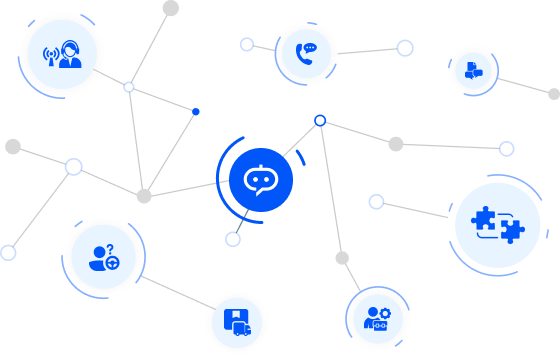
Employees benefit in tangible ways:

Logistics AI Agent

Dispatchers receive proactive alerts instead of reacting to missed SLAs
Customer support agents resolve queries in seconds, not minutes
Drivers receive clear, timely instructions without constant phone calls
Operations teams manage exceptions with confidence instead of guesswork
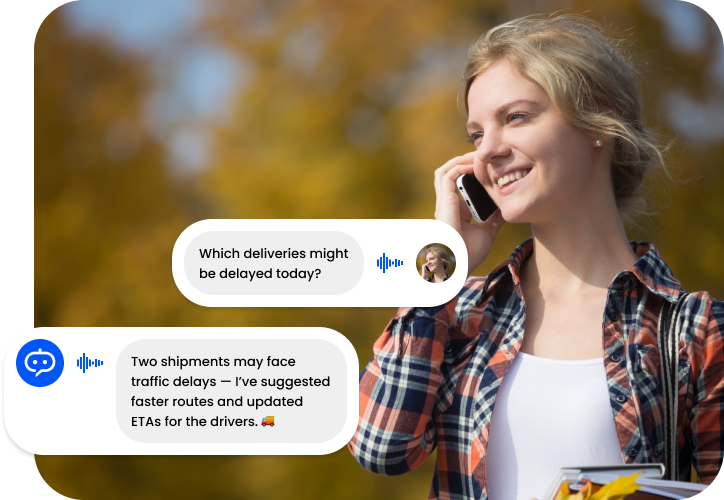
A logistic delivery chatbot for employee use is not a basic scripted tool. It understands natural language, context, and intent. An employee can ask, “Which deliveries are at risk this afternoon?” or “Has the customer for order 45821 confirmed the new address?” and receive an immediate, accurate response.
By removing friction from daily workflows, AI agents give employees back something invaluable: focus. Focus on customers. Focus on execution. Focus on doing the job well, without unnecessary stress.
Old World vs New World – Customer Journey with Live Dialogues
Logistics & Delivery Employee Experience in Action
The difference between traditional logistics operations and AI-powered delivery environments is not found in dashboards or technology diagrams. It is felt in everyday moments — when a customer calls for an update, when a dispatcher manages last-minute changes, or when a delivery employee is under pressure to solve a problem quickly.
This section walks through real-world delivery scenarios, contrasting the Old World of manual, fragmented operations with the New World powered by AI-driven logistics agents for employees. Each journey reflects what delivery teams experience daily, told through natural, human dialogue.
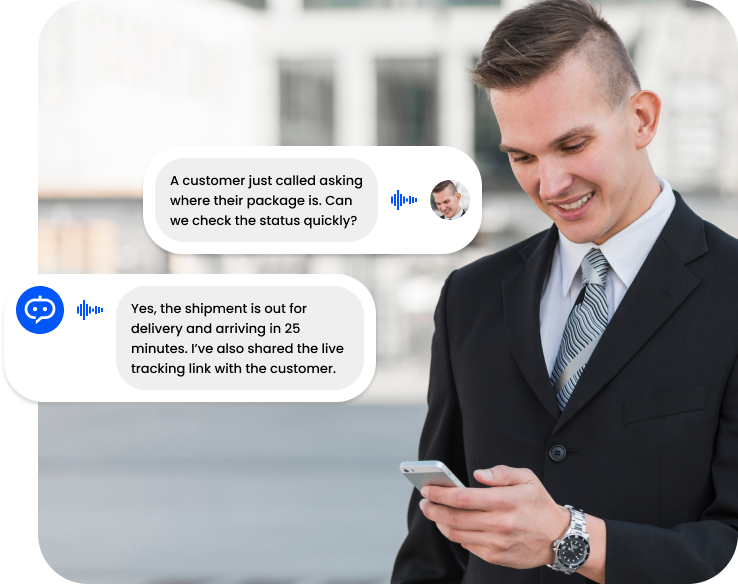
Multilingual Support & Customer Communication
Scenario 1
Scenario Context
A regional logistics provider handles cross-border e-commerce deliveries across multiple languages. Customer inquiries arrive through phone, email, and messaging apps. The delivery support team struggles to respond quickly and accurately.
Before AI
A customer in Spain contacts support regarding a delayed international shipment.
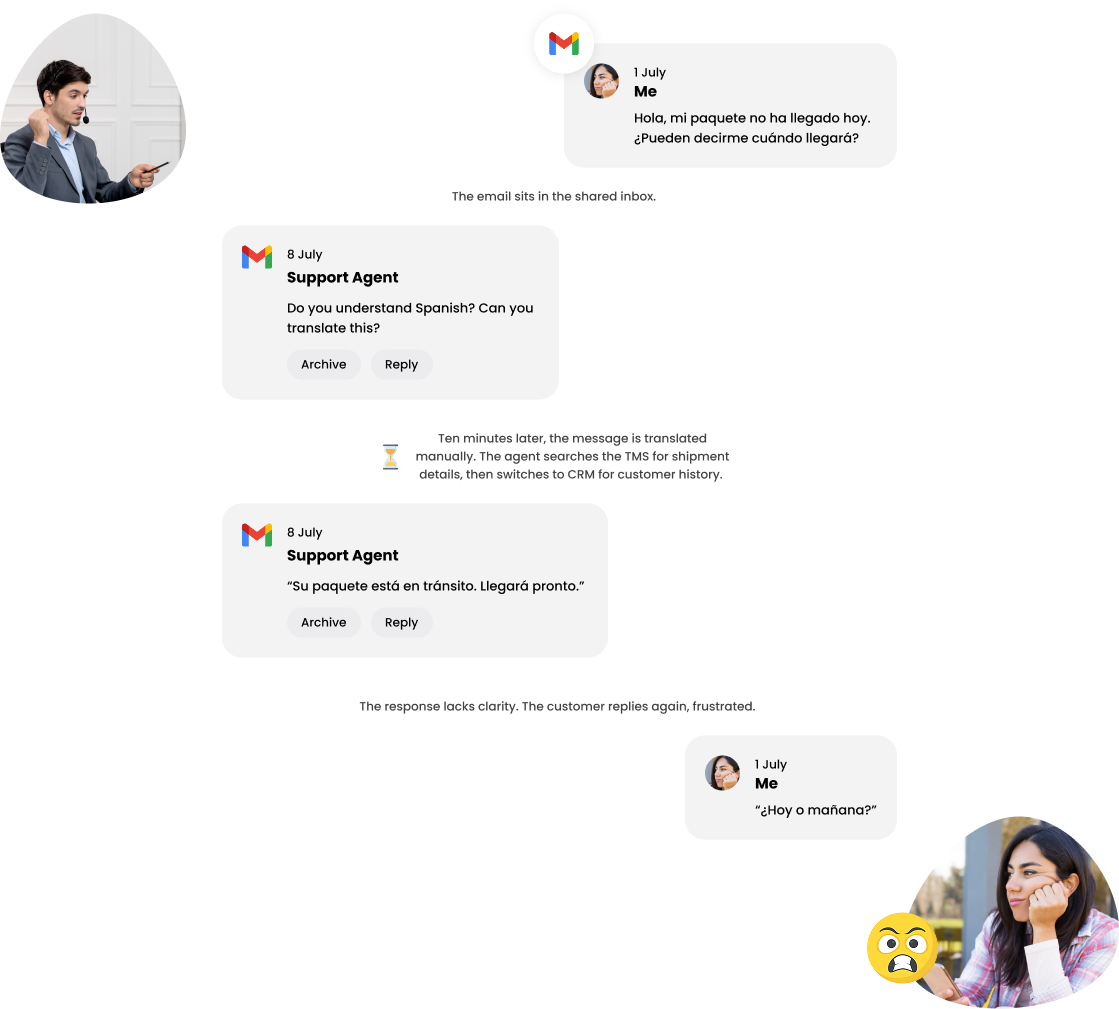
Result:
- Slow response
- Frustrated customer
- Unclear communication
- Stressed support employee
The agent hesitates, unsure. Another internal message is sent to operations. The delay continues.
With AI-Powered Logistics & Delivery Agents


Logistics AI Agent



Key Experience Improvements
Immediate multilingual communication
Clear, confident responses
Reduced employee effort
Higher customer trust
Operational Impact Summary
Faster resolution without language barriers
Lower handling time for support teams
Improved customer satisfaction
Employees focus on oversight, not translation
Scenario 2
Booking, Dispatch & Delivery Coordination
A last-mile delivery company manages same-day deliveries for local retailers. Peak hours create pressure on dispatchers and drivers, often leading to mistakes and delays.
Before AI
A retailer calls to request a same-day pickup.
I need a pickup today before
4 PM. Can you manage?


Let me check and call you back.
The dispatcher scans spreadsheets,
checks driver availability, and estimates
routes manually.

Can you squeeze one more
pickup near Main Street?
I’m not sure. Traffic is heavy.
After several calls, the dispatcher calls
the retailer back.
We’ll try, but no guarantee.
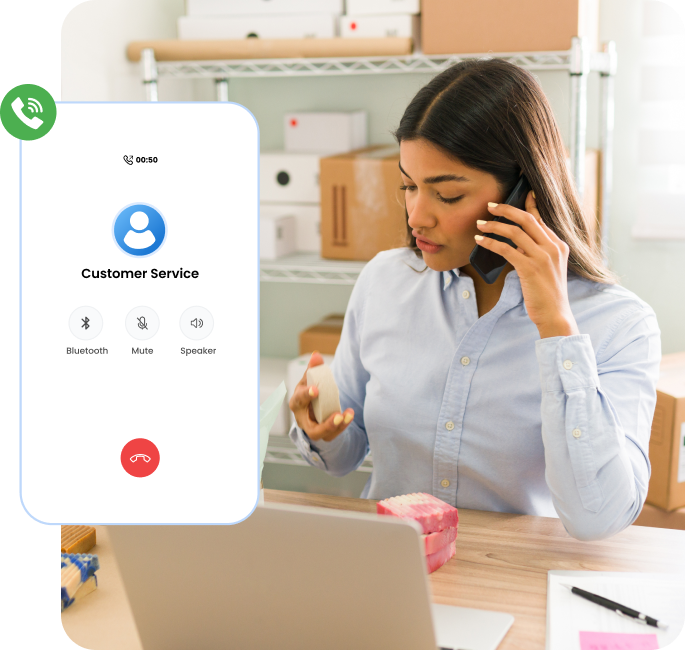
The pickup is delayed. The retailer is unhappy. The dispatcher feels the pressure.
With AI-Powered Logistics & Delivery Agents
The same request arrives, this time with AI assistance.

Logistics AI Agent
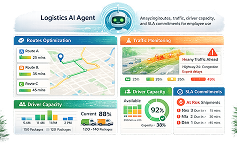
Key Experience Improvements
Instant booking confirmation
Optimized dispatch decisions
Reduced phone calls
Confident commitments
Operational Impact Summary
Higher on-time pickup rates
Lower dispatcher stress
Better driver utilization
Stronger retailer relationships
Scenario 3
Post-Delivery Support, Exceptions & Employee Enablement
Scenario Context
A delivery has been marked complete, but the customer claims the package was left at the wrong location. Situations like this test delivery teams, customer support agents, and managers — especially when information is scattered and responses are reactive.
Before AI
The customer calls the support line.
My order says delivered,
but it’s not at my door.

The support agent opens the CRM, then
the TMS, then searches emails.
Can you give me a few minutes while I check?
The agent messages the dispatcher.
Customer says
delivery missing. Do we know
where the driver left it?
The dispatcher calls the driver.
Did you deliver order 78214?
Yes, I left it near the
entrance. I think.

TNo photo, no precise location, no timestamped proof.
The agent calls the customer back with uncertainty.
We’re checking with
the driver. Please wait.

The issue drags on. The employee feels helpless. The customer feels ignored.
With AI-Powered Logistics & Delivery Agents
The same scenario, now supported by an AI agent for logistic delivery employees.

Logistics AI Agent
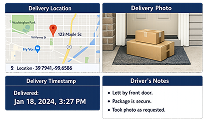
No escalation. No stress. No wasted time.
Key Experience Improvements
Immediate access to delivery proof
Confident, calm employee response
Fast issue resolution
Preserved customer trust
Operational Impact Summary
Fewer escalations
Reduced handling time
Higher employee confidence
Lower post-delivery support costs
The Role of AI in Creating Sustainable, Scalable Logistics Operations
Sustainability in logistics is often discussed in terms of fuel efficiency or emissions. But sustainability also means creating delivery operations that employees can manage day after day without burnout, confusion, or constant firefighting.
AI-powered logistics agents play a critical role in achieving this balance.

Logistics AI Agent

By reducing failed deliveries, AI directly cuts down on reattempts, empty miles, and unnecessary fuel usage. When delivery instructions are validated, addresses confirmed, and customers proactively informed, waste drops naturally. This is good for the environment — and equally good for employees who no longer deal with avoidable exceptions.
Resource optimization becomes practical rather than theoretical. AI agents continuously analyze routing efficiency, vehicle capacity, driver schedules, and fleet health. Dispatchers receive recommendations instead of raw data. Drivers follow optimized routes instead of improvising. Managers gain visibility without manual reports.
For growing logistics providers, scalability is often where operations break down. Adding more deliveries usually means adding more stress. AI changes this equation by allowing teams to handle higher volumes without linear increases in workload. The same number of employees can manage more complexity because intelligence absorbs the operational friction.
In global and regional operations, AI agents also support demand variability. Seasonal spikes, promotional surges, or cross-border shipments no longer overwhelm teams. AI helps prioritize, sequence, and balance workloads in real time, enabling employees to stay in control even during peak demand.
Sustainable logistics is not only about moving packages efficiently — it is about building operations where people can perform consistently, confidently, and responsibly.
Future-Ready Logistics Providers: Where AI Meets Employee-Led Delivery Experience
The future of logistics will not be defined by machines replacing people. It will be defined by how effectively organizations equip their employees with intelligence that helps them make better decisions, faster, and with greater confidence.
As delivery networks grow more complex, the role of employees evolves. Dispatchers become orchestrators rather than coordinators. Drivers become informed decision-makers rather than reactive executors. Customer support teams shift from firefighting to proactive service. AI-powered logistics agents make this transition possible.

Logistics AI Agent

Predictive service models are already reshaping daily operations. Instead of reacting to delays, AI agents forecast potential disruptions before they occur — whether due to traffic congestion, weather conditions, vehicle health, or customer availability. Employees receive recommendations in advance, giving them time to act calmly rather than under pressure.
Voice-enabled driver and dispatcher assistants further reduce friction. Drivers can ask simple questions while on the road — “What’s my next stop?” or “Has the customer confirmed availability?” — and receive instant, accurate responses without diverting attention. Dispatchers can manage exceptions hands-free during peak hours, improving both safety and efficiency.
Hyper-personalized delivery journeys also become achievable at scale. AI agents remember customer preferences, delivery windows, access instructions, and communication choices. Employees no longer rely on memory or notes. The intelligence is always present, guiding each interaction toward a better outcome.
Looking ahead, AI will support more advanced logistics innovations. Intelligent control towers will provide unified visibility across fleets, warehouses, and customer touchpoints. Semi-autonomous operations will emerge, with AI handling routine decisions and employees overseeing strategy and exceptions. In every case, the human remains central — empowered, not replaced.
Future-ready logistics providers understand this clearly. They invest in AI not as a cost-cutting tool, but as a workforce multiplier that strengthens reliability, resilience, and trust.
Solution Features of AI-Powered Logistics & Delivery Agents for Employees
AI-powered logistics agents are most effective when they integrate naturally into daily workflows. The following features define a solution built for real-world delivery employees and operations teams.

Omnichannel Employee & Customer Support
Employees and customers interact across chat, WhatsApp, SMS, email, voice, and internal systems. The AI agent maintains context across channels, ensuring continuity and clarity without repeated explanations.

Multilingual Workforce Assistance
AI agents communicate fluently in multiple languages, supporting global operations and diverse teams. Employees no longer struggle with translation delays or miscommunication.

Automated Booking & Shipment Coordination
Bookings, pickups, and delivery changes are handled instantly, with AI validating availability, capacity, and SLAs before confirmation.

AI-Powered Dispatcher & Driver Assistance
Dispatchers receive intelligent recommendations, while drivers get real-time guidance through mobile or voice-enabled interfaces, reducing dependency on calls and messag

Intelligent Upsell Recommendations
AI agents suggest relevant value-added services such as express delivery or insurance during interactions, helping employees increase revenue naturally without pressure.

Post-Delivery Follow-Ups & Returns Initiation
After delivery, the AI agent manages confirmations, feedback requests, and return initiation, reducing post-delivery workload for support teams.

Predictive Maintenance Alerts for Fleet Teams
By analyzing vehicle data, AI agents alert teams to potential maintenance issues before breakdowns occur, improving fleet reliability and safety.

Deep Integration with TMS / WMS / CRM / ERP
The solution connects seamlessly with existing enterprise systems, ensuring employees work from a single source of truth rather than fragmented data.

Real-Time Analytics & Exception Handling
Managers and employees receive live insights into performance, risks, and exceptions, enabling faster, more informed decisions.

Secure, Enterprise-Grade Cloud Architecture
Built on trusted cloud platforms, the AI agent ensures data security, compliance, and high availability without compromising performance.

Scalable Design for Growing Operations
As delivery volumes increase, the AI agent scales effortlessly, supporting expansion without proportional increases in staffing or complexity.
Key Business Benefits of AI Agents in Logistics & Delivery Operations
When AI-powered logistics agents are deployed with employees in mind, the benefits extend far beyond efficiency metrics. They reshape how people work, how customers experience delivery, and how organizations scale with confidence.

Improved Employee Productivity
By removing repetitive tasks such as manual tracking, status lookups, and routine communications, employees gain time to focus on higher-value work. Dispatchers make fewer calls, support agents resolve more cases per hour, and drivers operate with clearer guidance.

Reduced Operational Stress and Burnout
AI agents absorb the noise of daily operations. Proactive alerts replace last-minute crises. Clear recommendations reduce uncertainty. Employees work with confidence rather than constant urgency.

Higher Customer Satisfaction
Faster responses, accurate updates, and personalized communication create smoother delivery experiences. When employees are supported, customers feel it — through calm conversations and reliable outcomes.

Increased Revenue from Value-Added Services
AI-assisted recommendations allow employees to offer express delivery, insurance, or premium options naturally during interactions, driving incremental revenue without aggressive selling.

Lower Cost-to-Serve
Fewer failed deliveries, reduced reattempts, and optimized routing lower operational costs while maintaining service quality.

Scalable 24/7 Employee Support
AI agents operate continuously, supporting global teams across time zones. Employees are never without access to information or assistance.

Consistent Brand Voice Across Touchpoints
Whether communication comes from a human or an AI-assisted channel, messaging remains clear, accurate, and aligned with brand standards.

Actionable Insights for Managers
Real-time analytics help leaders identify bottlenecks, improve performance, and make informed decisions without waiting for reports.
Conclusion – Intelligence Is the New Luxury in Logistics & Delivery Workforces

Logistics has always been built on trust — the promise that something will arrive, safely and on time. That promise depends on people: the dispatcher who plans, the driver who delivers, and the support agent who reassures.
AI does not replace this human foundation. It strengthens it.
In a world of rising complexity and expectation, intelligence becomes the new luxury. AI-powered logistics agents give employees clarity in chaos, confidence under pressure, and consistency at scale. They transform delivery operations into environments where people can perform at their best — reliably, sustainably, and with pride in their work.
Organizations that equip their teams with AI agents will not only move goods more efficiently. They will set the standard for modern delivery experiences.
Explore BotBazaar — Your Gateway to Next-Generation Logistics AI Agent Solutions for Employees
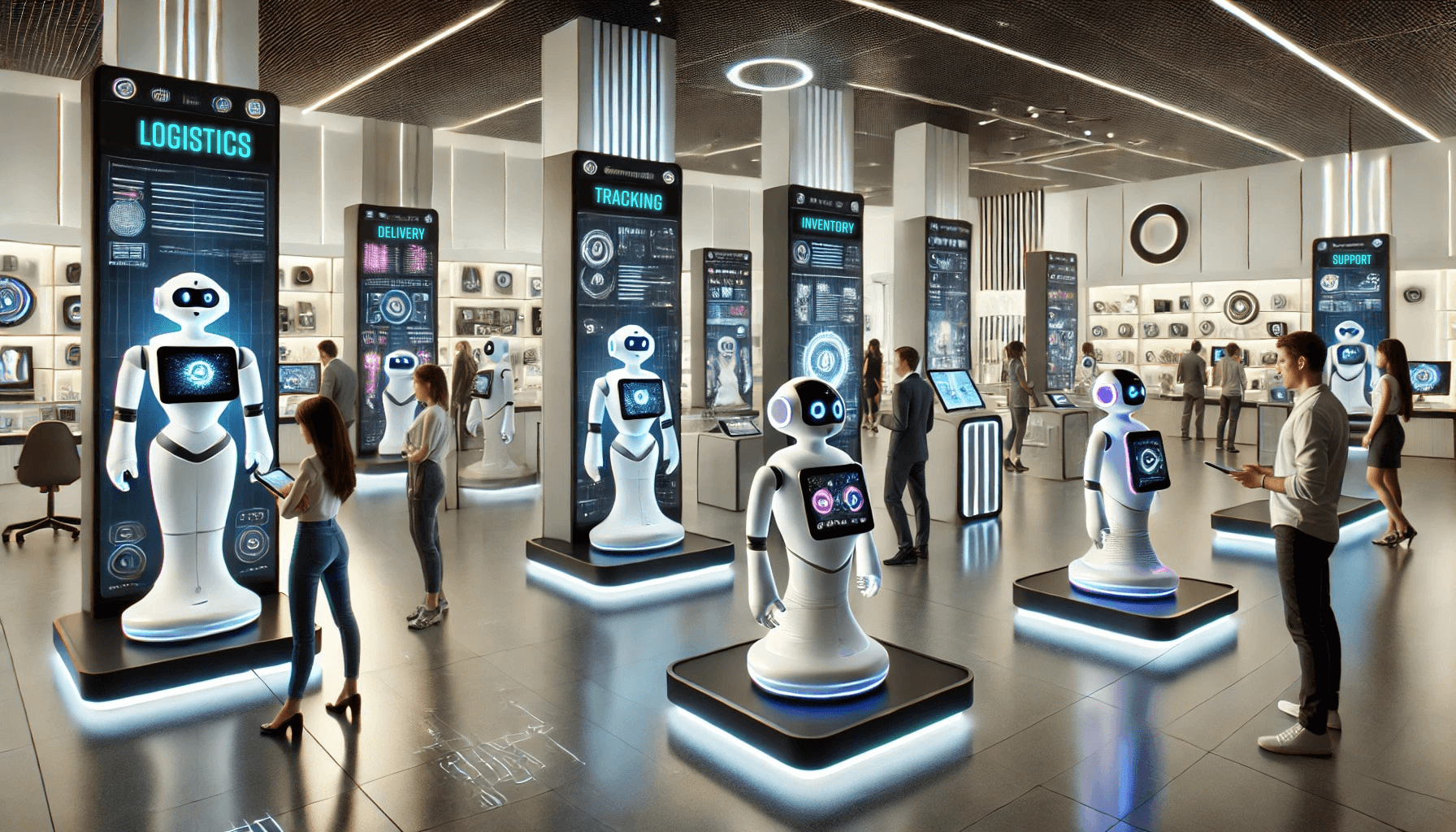
Choosing the right AI solution matters. BotBazaar brings together best-in-class logistics and delivery AI agents built on world-class technologies from Microsoft, Google, IBM, and Amazon.
These solutions deliver:

99% uptime reliability

Over 99%+ conversational accuracy

Seamless integration with TMS, WMS, telematics, billing, and CRM systems
Why Choose BotBazaar

AI Solutions for Logistics & Delivery

Powered by Global Tech Leaders you can trust

Exceptional Accuracy in real-world conversations

Seamless Integration with existing enterprise systems

Diverse Industry Options for different delivery models

Secure Compliance with enterprise-grade standards
Take the First Step.
Visit BotBazaar to compare logistics and delivery employee-focused chatbot and AI agent solutions, and connect directly with verified providers who understand the realities of modern delivery operations.
Frequently Asked Questions (FAQs)
What is a logistics AI agent for employees?

It is an intelligent assistant that supports delivery employees by handling communication, coordination, and decision support across logistics operations.
How is it different from a basic chatbot?
Unlike simple chatbots, AI agents understand context, integrate with enterprise systems, and actively assist employees with real-time insights.
Is it affordable for small and mid-sized logistics companies?
Yes. Solutions are designed to scale, making them accessible without large upfront investment.
Can it integrate with existing TMS, WMS, ERP, and CRM systems?
Yes. Seamless integration is a core capability.
Does it support multilingual teams and customers?
Yes. AI agents communicate fluently across multiple languages.
What accuracy levels can be expected?
Enterprise-grade solutions typically achieve 99%+ accuracy.
How long does implementation take?
Most deployments are completed within 2 to 4 weeks.
What ROI can logistics teams expect?
Organizations typically see reduced costs, higher productivity, and improved customer satisfaction within months.
Will AI replace human employees?
No. AI augments employees, allowing them to work more effectively.
How do I get started via BotBazaar?
Visit BotBazaar, compare solutions, and connect with verified AI providers suited to your delivery needs.
Omnichannel Solutions
Always look for solutions that are omni-channel
Today companies are deploying these AI Agent on the following channels