Top 10 AI Agent and Chatbot Development Companies for Insurance in 2026

Omnichannel Insurance AI Agents
Claims, policy & multilingual support across all channels
 India
India 
Multi-Cloud Generative AI Agents
Cloud-agnostic AI assistants for insurers
India 
IBM-Led Insurance AI & Automation
Secure IBM data, analytics & intelligent automation
 Irving, Texas, USA
Insurance Digital Transformation
AI, modernization & integration for insurers
 United Kingdom
Responsible & Governed Insurance AI
AI governance, risk & compliance for insurers
Atlanta, Georgia, USA 
Enterprise AI Agents for Insurers
Systems integration & enterprise AI for APAC insurers
 Philippines
Insurance AI for Financial Services
Enterprise solutions for Middle East insurers
 Kuwait
AI Customer Service for Insurers
Virtual agents for claims & policy support 24/7
 France
Data-Driven Insurance AI Agents
IBM watsonx AI on connected enterprise data
 Sweden
Scalable Insurance AI on the Cloud
Cloud & data engineering for AI customer service
Sweden 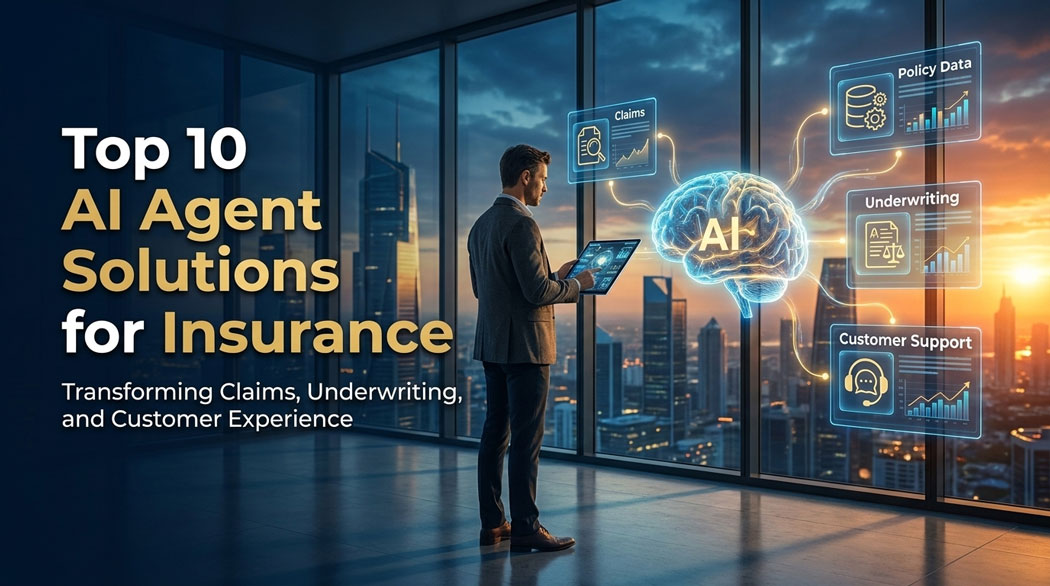
Top 10 AI Agent and Chatbot Development Companies for Insurance in 2026
The age of Agentic AI has arrived for the insurance sector. Starting from bots on insurers’ websites responding to queries with answers based on frequently asked questions, today’s AI agents have come to possess the capability to analyze the context, access policy information, kick-start processes, process claims, assist underwriters, and aid customers in decision-making. By the year 2026, the focus for insurers is no longer about whether AI agents should be deployed but who can develop them reliably and securely.
It’s important because insurance is a high-friction industry. Customers require assistance at critical junctures: purchasing insurance, lodging claims, reviewing coverage, renewing insurance plans, handling billing disputes, or comprehending exceptions. A standard chatbot could answer questions such as “What is term life insurance?” A sophisticated AI system could confirm the customer’s identity, access their insurance plan details, translate insurance jargon into understandable terms, gather additional information for their claim, forward challenging claims to a human adjuster, and update the CRM or insurance company systems without requiring the customer to repeat themselves.
This is why there will be a need for Top 10 ai agent development companies in the insurance industry. . Yet the market is crowded with vendors that package generic chatbot templates as “AI transformation.” Only a select few can build enterprise-level AI agents that seamlessly connect with claims, underwriting, policy administration, customer relationship management (CRM), enterprise resource planning (ERP), document management, fraud detection, and compliance platforms.
As McKinsey highlights, it’s critical for insurance companies to transition from experimenting with AI in silos to deploying AI in underwriting, claims, distribution, service, and operations to unlock lasting value. Gartner forecasts that by the end of 2026, 40 percent of enterprise applications will have AI agents embedded, compared to just 5 percent in 2025. For insurance executives, this is an unmistakable sign that AI agents are a core component of the business model.
Why Insurance Has Outgrown Scripted Automation
Old-school insurance automation was linear. It followed rules: press one for claims, press two for billing, type a keyword, choose from a menu. These systems reduced some call-center load, but they often failed when customers used natural language, switched topics, uploaded documents, or asked about policy-specific scenarios.
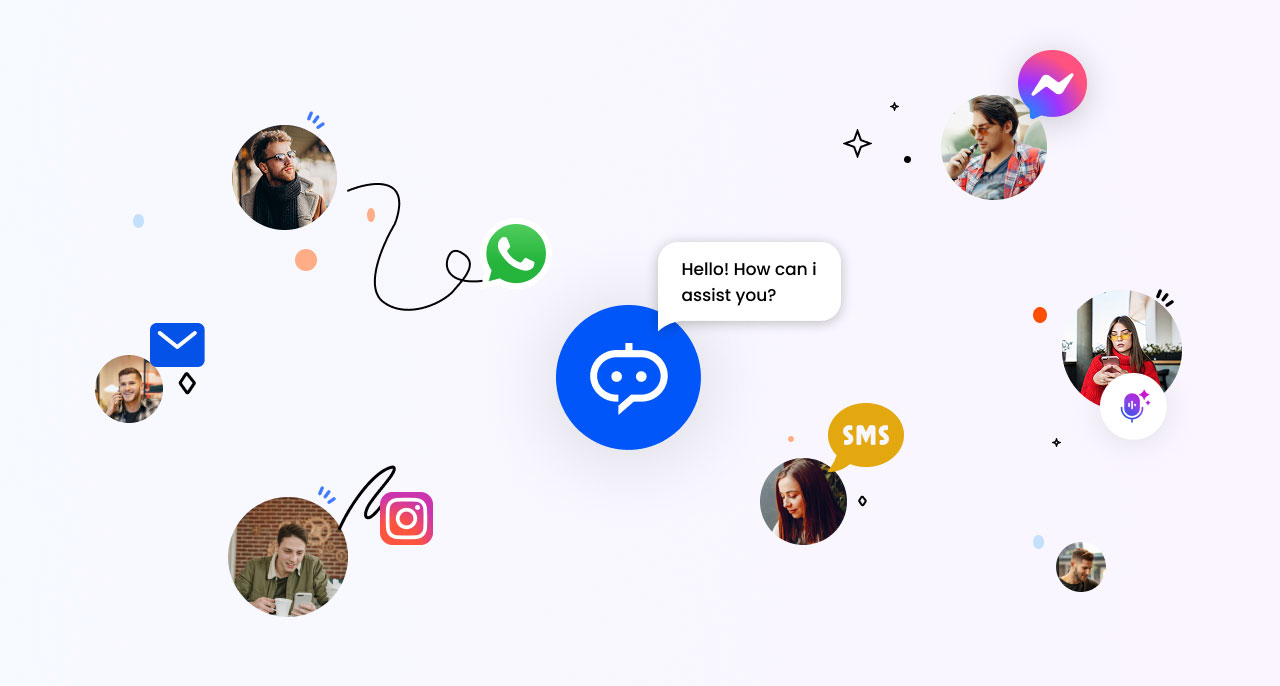
By contrast, 2026’s context-aware AI agents can combine natural language understanding, retrieval-augmented generation, workflow automation, document intelligence, speech interfaces, and API orchestration. They can support mobile apps, web chat, WhatsApp, email, voice bots, agent desktops, and internal portals. The best AI agents do not simply “chat.” They complete tasks.
This evolution is especially important in insurance because customer expectations have been reset by digital banking, e-commerce, ridesharing, and healthcare apps. Salesforce’s State of the AI Connected Customer research is based on more than 16,000 consumers and business buyers and focuses on how AI, generative AI, and agents are reshaping trust and customer expectations. In insurance, that means customers increasingly expect instant answers, transparent next steps, and seamless handoffs across channels.
The business case is also expanding. EY reports that 68% of insurers are investing in chatbots to drive cross selling and value-added products. A 2025 insurance AI adoption report found that 65% of IT leaders are focused on introducing or scaling AI solutions, while claims and underwriting leaders are prioritizing efficiency, premium growth, and speed to quote. These numbers explain why buyers are looking for the Top ai agent development companies for insurance rather than generic software vendors.
The Implementation Gap: Why Many Insurance AI Projects Fail
The biggest risk in insurance AI is not choosing the wrong model. It is choosing the wrong implementation partner.
This is because many failed chatbot initiatives have the same story to tell. They start off with an impressive demo, train the bot for a few Frequently Asked Questions, deploy them on their site, and claim victory. Then reality arrives. Customers ask messy questions. Claims workflows require multiple backend systems. The language of the policy differs depending on state, region, product, or rider. Legacy platforms lack APIs that can be used easily. The compliance team questions how the data is handled, logged, masked, and managed. The artificial intelligence agent begins to hallucinate, escalates excessively, or gives vague answers to users.
The first failure point is low intent accuracy. Insurance language is nuanced. “I lost my card,” “I need proof of insurance,” “my vehicle was damaged,” and “I want to cancel” may all require different workflows depending on policy type, customer status, geography, and channel. Hence, accurate NLU and contextually intelligent technology are essential. While some consumers of insurance seek solutions that achieve up to 99%+ accuracy in intents, what really matters is the ability to achieve such performance in real-world conversation, multi-lingual expression, edge cases, and policy-related contexts.
The second failure point is integration. AI agents are only useful when they can act. In insurance, that means connecting with Guidewire, Duck Creek, Salesforce, Microsoft Dynamics, SAP, Oracle, ServiceNow, IBM i/AS400 systems, payment platforms, document repositories, CRM, ERP, claims systems, policy administration platforms, broker portals, and data lakes. Streebo, for example, describes insurance chatbot integrations with backend systems such as Genelco and IBM AS/400 in an insurance-agent use case.
The third failure point is security and compliance. Insurers manage personal identifiers, medical information, financial information, claims information, information about beneficiaries, payment information, and occasionally protected health information. GDPR, HIPAA, SOC 2, ISO 27001, governance modeling, audit logs, role-based access controls, encryption, retention management, and human escalations are non-negotiables. It is for this reason that the top-tier partners invest in AI ecosystems within enterprises such as IBM watsonx, Microsoft Azure AI, AWS AI, Google AI, OpenAI, Claude, Gemini, and governed private-cloud or hybrid-cloud platforms.
How to Select the Right AI Agent Partner
The most successful insurance AI programs begin with partner selection, not model selection. While OpenAI, Claude, Gemini, Grok, IBM watsonx, Amazon Bedrock, Azure OpenAI, and Google Vertex AI may all be highly effective, technology alone will not ensure success. A good partner knows how insurance business works, understands the importance of sensitive data, omnichannel experience, change management, and the difference between responding to and resolving inquiries via AI.
When evaluating the Top chatbot development companies for insurance, look for six capabilities. To start, the partner must be able to deliver high precision NLU and generative AI guardrails. Next, it should provide multilingual and voice capabilities for the customer, broker, and employee experience. Then, it should have deep integrations with the CRM, ERP, policy, claims, underwriting, billing, and documents applications. Next, it needs to provide omnichannel deployment including web, mobile, WhatsApp, SMS, email, call center, and voice channels. Also, it must have enterprise-level security, audit, and compliance features. Last, it should have an adoption plan which involves training, analytics, optimization, human handover, and improvements.
With that lens, here is an editorial power list of the Top 10 ai agent development companies for insurance in 2026.
1. Streebo

- Specialties:Insurance AI agents, conversational AI, multilingual bots, voice bots, customer service automation, claims support, backend integration, low-code bot development.
-
Why They Stand Out: Streebo has one of the clearest insurance-specific AI agent propositions on this list. Its insurance chatbot offering highlights generative AI-powered virtual assistants for policy administration, claims processing, underwriting, fraud detection, and customer support, with deployment across chat, voice, email, Instagram, Facebook, WhatsApp, and SMS. Furthermore, Streebo claims that its wider AI chatbot framework is backed up by technology from Google, IBM, and Amazon and can handle multilingual pre-trained bots in various industries.
Streebo is suitable for insurance companies that are looking for an adaptable, enterprise-level platform as opposed to a channel-based FAQ bot. The low-code and point-and-click integration abilities of Streebo will help integrate with databases, ERP, and CRM platforms. - Use Case Fit: Insurance firms looking for multi-channel AI insurance agents, good integration capabilities, multilingual services, and flexible deployment options.
2. Rybo

- Expertise: Virtual AI assistants, enterprise chatbot technology, AI integration, and cloud-based conversation AI.
-
Why They Stand Out: Rybo differentiates itself on its cutting-edge chatbot technology and integration capabilities with GPT on Microsoft Azure, IBM watsonx, AWS SageMaker, Google Gemini, and others. This flexibility is critical for insurers who prefer not to be tied down to any model vendor or cloud platform.
The Rybo solution is well suited to insurance businesses that require an agentic AI that operates across different functions: service, sales, claims, brokers, and internal knowledge. - Best For: Insurance companies and financial-service providers that are looking for a cloud-agnostic agentic AI platform on the top AI platforms.
3. DAI Source
- Specialties: IBM software-based solutions, AI-powered analytics, intelligent automation, secure data architectures, modernizing enterprises.
-
What makes this unique: DAI Source is a Strategic IBM Platinum Partner specializing in secure data architectures by design, AI-powered analytics, and intelligent automation. The fact that this is IBM-focused is pertinent to insurance because many insurance firms have complex enterprise technology estates which require governance and trust.
DAI Source could be ideal in scenarios where modernizing data estates, leveraging IBM-based software solutions, and AI integration into analytics and automation are key considerations. - Good Fit For: Complex data estate insurers with a focus on IBM enterprise modernization.
4. Deeper Than Blue
- Expertise: Digital transformation, app modernization, cloud hosting, software integration, artificial intelligence and automation, analytics.
- Why They Stand Out: The company is a digital transformation consulting firm that collaborates with some of the biggest names in technology around the world in digital transformation, eCommerce, artificial intelligence and automation, cloud hosting, software integration, and analytics. This is important for insurance businesses since an AI agent would need more than a chatbot.
- Good For: Insurance firms upgrading their digital customer journeys and legacy systems.
5. TrustNet Tech
- Specializations: Responsible AI, AI governance, responsible AI strategy, risk management, human-centered AI adoption.
-
Why They Stand Out: TrustNet.AI specializes in transparent, trusted, responsible, and governed AI. It’s particularly pertinent to the insurance industry since responsible AI is playing an increasingly important role in claim assessment, underwriting, client communication, and compliance.
TrustNet Tech isn’t just a chatbot developer; it’s more accurately a governance-focused AI company. This could be a strong point for those in insurance who are concerned about discrimination, explainability, compliance, and reputational risks. - Best For: Insurance companies that require AI governance, responsible AI strategy, risk management, and agent-first approaches.
6. Questronix
- Specialties: System integration, enterprise artificial intelligence assistant/chatbot applications, IBM, automation, data management, cybersecurity, infrastructure.
-
Why They Stand Out: Questronix is one of the largest technology solutions providers and systems integrators in the Philippines, and its solutions portfolio includes artificial intelligence and machine learning, cognitive computing platforms, and enterprise AI assistant/chatbot capabilities.
Questronix is an excellent choice for insurers in the Asia-Pacific region due to its expertise in systems integration, enterprise infrastructure, and AI-based chatbot technology. - Best For: APAC insurers requiring enterprise integration, IBM-oriented AI, infrastructure modernization, and safe implementation.
7. ITS Kuwait

- Specialties: Technology for the financial services sector, enterprise solutions, infrastructure, digital banking, and government and private sector transformation.
- Why They Stand Out: According to International Turnkey Systems, it offers high-end technology solutions to insurance firms, financial institutions, government agencies, and the private sector that are vital to business operations via enterprise and infrastructure solutions.
- Best For: Middle Eastern insurers and financial service companies.
8.H2S Technology
- Specialties: AI-powered customer service automation, intelligent virtual assistants, omnichannel support, real-time customer engagement, and workflow automation for insurance providers.
- Why They Stand Out: H2S Technology helps insurers modernize customer service through AI-driven virtual agents that can handle policy inquiries, claims support, customer onboarding, and routine service requests in real time. Their solutions are designed to improve response times, reduce operational workload, and deliver more personalized customer experiences across digital channels. For insurance companies looking to scale customer support while maintaining accuracy and efficiency, H2S Technology provides AI agents that streamline interactions and enhance overall customer satisfaction.
- Best For: Insurance companies interested in cybersecurity, risk monitoring, and secured agents.
9. Middlecon

- Specialties: AI-powered customer service solutions, enterprise data integration, analytics, IBM watsonx, intelligent automation, and AI-driven knowledge management.
- Why They Stand Out: Middlecon combines deep expertise in AI, analytics, and enterprise data platforms to help insurers build smarter customer service AI agents. Their strength lies in connecting and organizing enterprise data so AI assistants can deliver accurate, context-aware responses for policy inquiries, claims updates, customer onboarding, and support workflows. With experience across IBM watsonx, AI/ML, and enterprise information management, Middlecon enables insurers to move beyond basic chatbots toward more intelligent, data-driven customer engagement.
- Best For: Insurers building AI customer service agents that rely on connected enterprise data, personalized support experiences, and intelligent knowledge access.
10. Kermit Tech
- Specialties: AI-powered customer engagement, data engineering, cloud enablement, scalable AI solutions, data virtualization, and workforce transformation.
- Why They Stand Out: Kermit Tech helps organizations modernize customer interactions by combining AI capabilities with scalable cloud and data infrastructure. Their expertise in data engineering and AI-ready architectures allows insurers to deploy intelligent customer service agents that can access information quickly, automate routine interactions, and provide seamless support experiences across channels. Kermit Tech’s focus on secure, scalable solutions makes them particularly relevant for insurers looking to improve service efficiency while preparing for long-term AI adoption. <
- Best For: Insurers seeking scalable AI customer service agents supported by strong cloud infrastructure, modern data architecture, and seamless digital customer experiences.
Quick Comparison: 2026 Insurance AI Agent Partner Shortlist
| Company | Best Known Strength | Strong Fit For |
|---|---|---|
| Streebo | Omnichannel insurance AI agents and chatbot deployment | Claims, service, policy support, multilingual engagement |
| Rybo | Multi-cloud generative AI architecture | Cloud-flexible AI virtual assistants |
| DAI Source | IBM-led secure automation and analytics | Enterprise insurance environments |
| Deeper Than Blue | Digital transformation and integration | Application modernization and customer journeys |
| TrustNet Tech | Responsible AI and governance | Compliance-sensitive AI adoption |
| Questronix | Systems integration and enterprise AI assistants | APAC insurers and large IT estates |
| ITS Kuwait | Financial-sector enterprise solutions | Middle East insurers and financial institutions |
| H2S Technology | AI-powered security operations | Secure AI agent operations |
| Middlecon | Data, AI, IBM watsonx, information management | Data-driven underwriting and claims intelligence |
| Kermit Tech | Data engineering and cloud enablement | AI-ready data architecture |
Conclusion
With the fast pace of technological developments in artificial intelligence (AI), the insurance sector is moving towards becoming smarter, more adaptable, and more customer oriented. AI can help insurance companies digitize processes from discovering a policy to quoting and handling claims, collecting documents, managing renewals, and offering customer service.
These firms mentioned above in the top ten artificial intelligence agent development companies in the insurance industry by 2026 could prove very useful for insurance firms that aim to cut down on their operating expenses, increase customer engagement, assist their agents, and manage claims and underwriting.
Also, with the advancement of digital transformation in the insurance industry, there is going to be more emphasis on security, compliance, multilingualism, and integration of artificial intelligence agents into web, mobile, WhatsApp, voice, CRM, ERP, and insurance core systems.
About BotBazaar
BotBazaar is a globally trusted, independent directory of AI-powered chatbot and AI agent development companies. It evaluates vendors on performance, security, compliance, multilingual capabilities, industry expertise, and integration flexibility.
If you’re exploring solutions from the Top AI Agent Development Companies for Insurance in 2026, BotBazaar helps you compare and select the right platform for your business needs.
Create the Next Level of Insurance AI Experiences
Ready to transition from conversational bots to insurance AI? The journey begins with an evaluation of where your organization stands in terms of customer experiences, systems infrastructure, regulatory compliance, and vendor capabilities for providing you with accuracy, integration, scalability, and governance.
Insurance’s future is bright for those who harness the power of AI. Choosing from the Top 10 ai agent development companies for insurance is a strategic first step toward that future.
FAQs
What are the Top 10 AI Agent Development Companies for Insurance in 2026?

The top companies include Streebo, Rybo, DAI Source, Deeper Than Blue, TrustNet Tech, Questronix, ITS Kuwait, H2S Technology, Middlecon, and Kermit Tech. These companies offer strengths across AI agents, chatbot development, data integration, security, governance, and enterprise transformation.
How do I choose from the Top AI Agent Development Companies for Insurance?
Look for domain expertise, high intent accuracy, multilingual support, omnichannel deployment, CRM and ERP integration, compliance readiness, analytics, security, and post-launch optimization.
What are the Top 10 Chatbot Development Companies for Insurance?
The Top 10 Chatbot Development Companies for Insurance include vendors that go beyond FAQ automation and provide enterprise-ready conversational AI, workflow integration, secure deployment, and scalable support across channels.
Why are AI agents important for insurance companies?
AI agents help insurers improve customer service, reduce manual workload, support claims, assist underwriting, automate policy servicing, and deliver real-time answers across digital channels.
What features should an insurance AI chatbot include?
A strong insurance AI chatbot should include NLU, multilingual support, omnichannel communication, CRM and ERP integration, secure data handling, compliance controls, human escalation, analytics, and high response accuracy.