Transform Your Logistics Operations with AI-Powered Delivery Assistant

Generative AI-Powered Logistics AI Agents
Redefining Delivery Experiences for the Digital Commerce Era


AI Powered Logistics Assistant


The logistics and delivery industry is entering one of the most transformative periods in its history. With global e-commerce demand rising, customers now expect every delivery to be fast, transparent, flexible, personalized, and on their terms. Traditional delivery operations—built on manual processes and siloed systems—simply cannot keep up with rising expectations, shrinking delivery windows, and the operational complexity of modern logistics networks.
Enter Generative AI-powered Logistics AI Agents: intelligent, autonomous systems built to simplify delivery operations, automate customer interactions, optimize dispatch workflows, and enhance the overall delivery experience. These agents don’t merely respond to customers—they understand context, predict intent, and act proactively.
 How can AI improve delivery speed and transparency?
 Can AI optimize routes and dispatch automatically?
 Can AI reduce manual work in delivery operations?
 Can AI reroute packages after failed delivery?
 How does AI send real-time shipment updates?
 Can AI help resolve delivery exceptions faster?
Does AI support multilingual customer service?
Can AI help resolve delivery exceptions faster?
Does AI support multilingual customer service?
 How can AI help 3PL/4PL companies improve reliability?
 Can AI manage large fleets and nationwide operations?
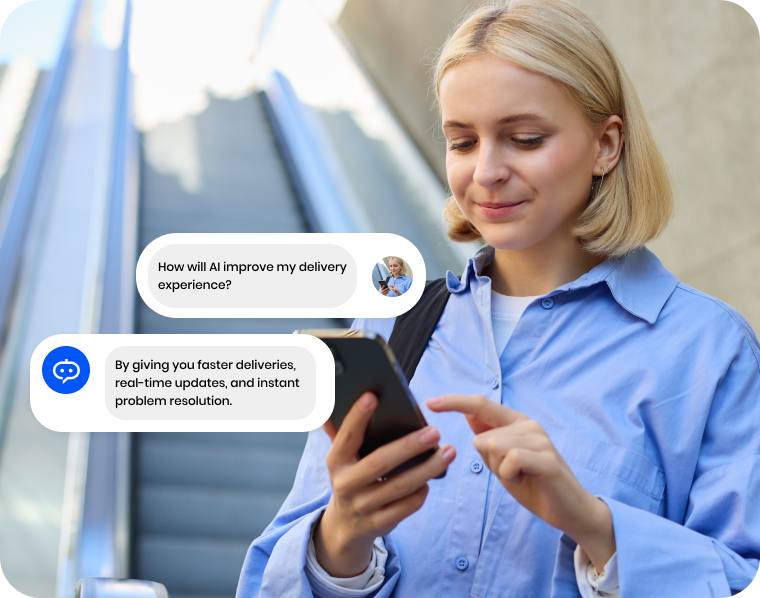
Whether it’s rerouting a package due to failed delivery attempts, notifying customers about shipment progress, helping dispatch teams resolve exceptions, or powering multilingual customer service across WhatsApp, website chat, SMS, phone, and mobile apps—AI agents are becoming the backbone of modern logistics operations.
For last-mile delivery companies, courier services, 3PL/4PL enterprises, fleet operators, and e-commerce fulfillment providers, AI agents represent a new era of reliability, automation, and operational intelligence.
Reimagining Delivery Operations with Generative AI-Powered Logistics Agents
In logistics, every minute matters—whether it’s matching drivers to routes, responding to customer queries, or resolving exceptions like incorrect addresses or missed deliveries. Yet many logistics organizations still operate with:

Manual dispatch processes
Slow, inconsistent customer service
Fragmented systems that do not talk to each other (TMS, WMS, CRM, ERP, Telematics)
High operational costs due to repetitive tasks
Limited multilingual capabilities
Poor customer tracking visibility
High rate of failed or rescheduled deliveries

AI Powered Logistics Assistant

Generative AI transforms these challenges by acting as a 24/7 virtual logistics coordinator and customer assistant, available across every communication channel. These agents automate thousands of manual tasks, including:

Shipment bookings

Pickup scheduling

Address modifications

Delivery rescheduling

Customer query handling

Package tracking updates

Upselling express, insured, or time-slot deliveries

Returns and reverse logistics

Exception management
AI agents bring together the power of natural language understanding, predictive intelligence, and real-time operational context, enabling logistics companies to operate faster, leaner, and with world-class customer engagement.
Did You Know?
The Impact of AI Agents in Logistics and Delivery
AI is rapidly reshaping logistics worldwide. Here are some powerful statistics that highlight its growing impact:
30%
30% reduction in failed deliveries through predictive address verification and real-time communication.
3x
3x higher efficiency in managing exceptions, rerouting, and customer updates using AI-powered automation.
50%
50% improvement in delivery experience satisfaction when AI handles notifications and tracking.
40%
40% reduction in customer support costs using AI-powered virtual agents
65%
Up to 65% faster response times for delivery queries with automated AI assistants.
Every metric points to one truth: AI is becoming essential for delivering scalable, modern logistics experiences.
How AI Agents Are Transforming Logistics Networks and Last-Mile Delivery
Modern logistics is not just about moving packages—it’s about orchestrating complex networks that span cities, countries, and continents. AI agents make this possible by:
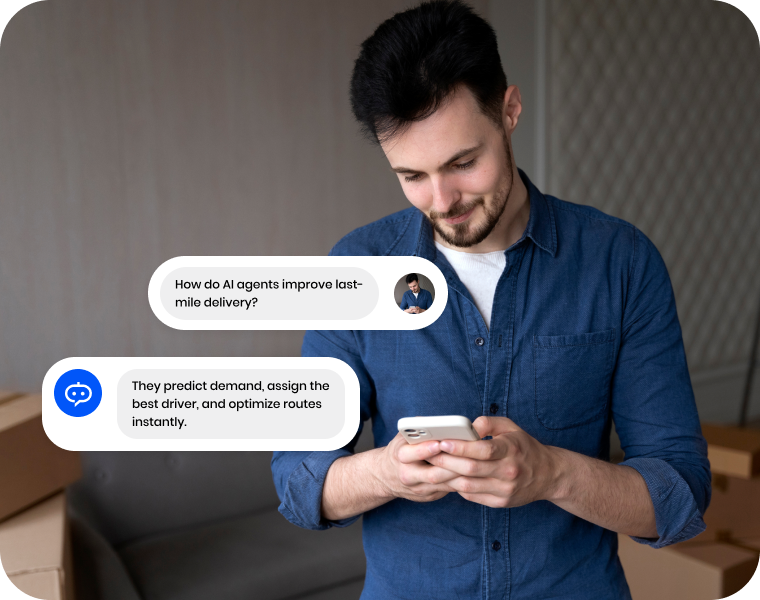
AI agents handle 80–90% of routine queries across channels such as WhatsApp, SMS, web chat, email, and voice. Customers can instantly:
- Track shipments
- Change delivery times
- Modify addresses
- Report issues
- Initiate returns
- Request pickup
All without waiting for human support.
AI helps teams resolve exception cases faster, such as:
- Driver delays
- Lost packages
- Incorrect addresses
- Failed delivery attempts
- Vehicle maintenance alerts
This leads to smoother last-mile operations.
AI agents automatically log updates, push notifications, synchronize data across systems, and trigger workflows in TMS, WMS, CRM, or ERP platforms.
AI offers personalized delivery slots, recommends express delivery upgrades, provides instructions in the customer’s preferred language, and sends proactive notifications.
AI agents provide real-time visibility for customers, drivers, and internal teams—reducing frustration and improving trust.
Logistics companies adopting AI are not just improving service—they are redefining their entire operational model.
Case Study 1
Below are three anonymized case studies inspired by real-world cloud provider success stories, adapted for the logistics sector.
Driving Customer Loyalty in East Asia
Overview
A major East Asian parcel and freight operator faced challenges in managing multilingual customer service across its rapidly expanding customer base. With deliveries spanning five countries and thousands of customer inquiries daily, the company struggled to maintain response consistency and speed


The logistics giant deployed a Generative AI-powered multilingual logistics agent built on Microsoft Azure cognitive and language services. The AI agent handled inquiries across:
- Web Chat
- Mobile App
- Call Center IVR
It automated shipment tracking, pickup scheduling, and delivery rescheduling while supporting English, Mandarin, Korean, and Japanese.
Key Features
Multilingual NLP engine
Real-time integration with CRM and TMS
Automated shipment updates and ticket creation
Personalized notifications and delivery suggestions
Quantifiable Impact
35% faster multilingual response times
2.2x improvement in customer satisfaction scores
21% fewer failed deliveries through proactive address verification
48% reduction in call center load
Conclusion:
The logistics provider transformed its customer experience and operational efficiency, creating a unified digital engagement platform powered by AI.
Case Study 2
Streamlining Delivery Bookings in North America
Overview
A North American on-demand delivery and courier platform experienced unprecedented growth during the e-commerce boom. Manual booking verification, slow customer responses, and fluctuating demand made scaling difficult.


The company deployed a Google Cloud-based Generative AI booking and dispatch agent integrated with its mobile and web platforms. The AI automated:
- Booking intake
- Address validation
- Slot recommendations
- Delivery confirmation
- Tracking updates
Key Features
Google Vertex AI conversational platform
Real-time TMS and route optimization integration
Autonomous booking workflows
AI-powered fare estimation and slot prediction
Quantifiable Impact
27% more bookings completed without human intervention
37% reduction in customer wait time
3x faster exception handling
19% growth in express delivery upgrades
Conclusion:
Automation gave the company the agility to scale regionally while delivering exceptional customer experiences.
Case Study 3
Elevating Delivery Service Excellence in Southeast Asia
Overview
A Southeast Asian logistics company managing large delivery fleets struggled with unexpected vehicle breakdowns and delayed deliveries affecting SLAs.


The company implemented an AWS-powered predictive maintenance and delivery assistance AI agent. The system used telematics, IoT data, and historical fleet performance records to predict failures and alert operators before a breakdown occurred.
Key Features
AWS machine learning models for predictive maintenance
Real-time driver alerts via mobile
Autonomous customer notifications for delays
Intelligent allocation of backup drivers and vehicles
Quantifiable Impact
45% fewer breakdown-related delivery failures
30% increase in fleet availability
22% reduction in maintenance costs
40% faster customer delay communications
Conclusion:
AI enabled the company to maintain top-tier delivery performance, reduce fleet downtime, and build stronger customer trust.
The Role of AI in Creating Sustainable, Scalable Logistics Operations
The logistics sector has long grappled with waste—wasted miles, wasted fuel, wasted time, and wasted effort. AI agents help businesses become more sustainable and scalable by:
Reducing Failed Deliveries Automatic address validation and real-time communication minimize unnecessary trips.
Optimizing Fleet Usage Predictive maintenance reduces downtime and keeps vehicles in optimal health.
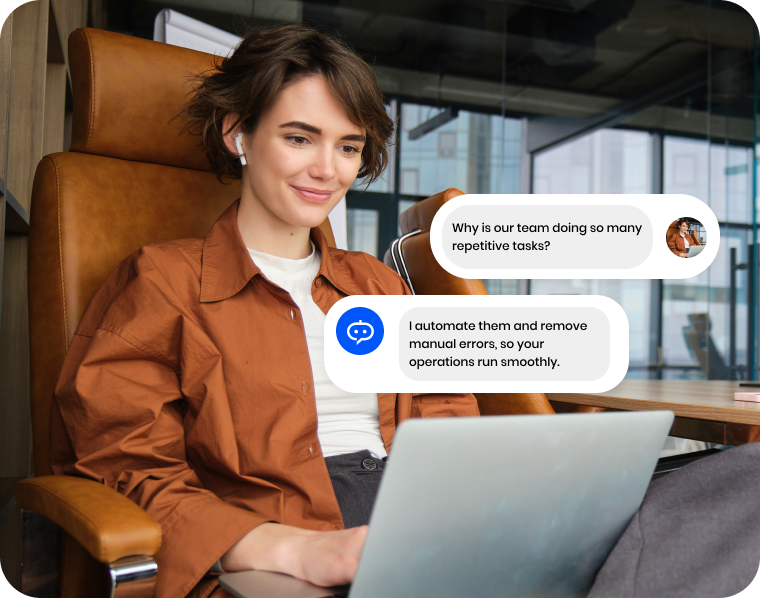
Minimizing Operational Waste AI automates repetitive tasks, reduces human error, and ensures accurate workflow execution.
Smart Route Planning AI works with existing route optimization engines to improve ETA accuracy and fleet efficiency.
Better Resource Allocation Peak demand forecasting ensures the right number of drivers and vehicles are available at all times.
Lower Carbon Footprint More efficient operations equal fewer miles traveled and reduced emissions.
AI isn’t just making logistics faster—it’s making it greener, smarter, and future-ready.
Future-Ready Logistics Providers: Where AI Meets Delivery Experience
The logistics providers who win the next decade will be those who combine operational efficiency with exceptional delivery experiences. AI enables:
AI anticipates customer needs—slot changes, package delays, delivery risks—and acts proactively.
Drivers can get hands-free navigation, instructions, or support. Customers can check delivery status through voice bots.
Time slot preferences
Preferred delivery locations
Language preferences
Notification channels
From booking to delivery completion, many workflows run without human intervention.
AI enables command centers to monitor real-time exceptions and act instantly.
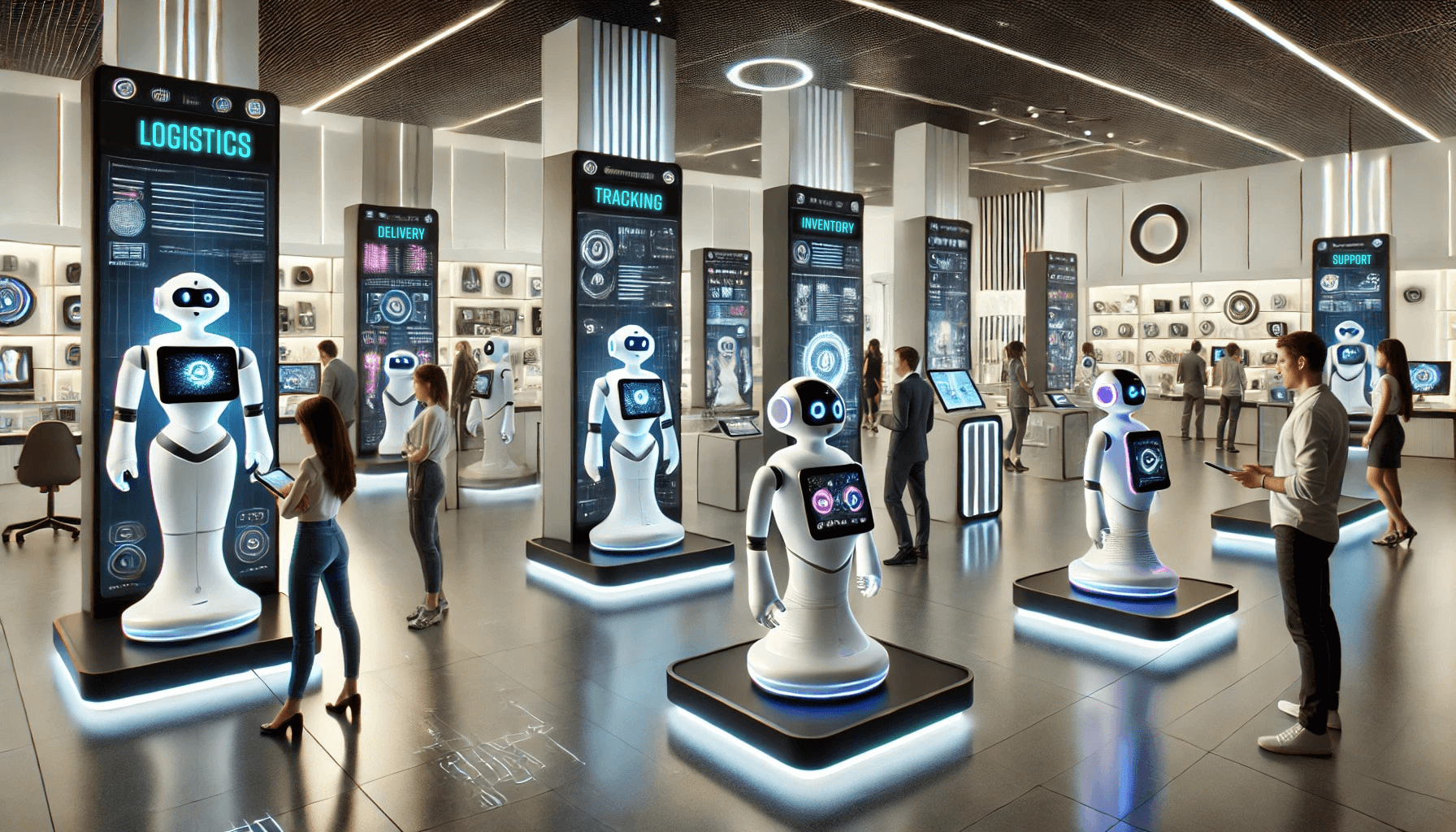
- Autonomous delivery vehicles
- Drone delivery scheduling
- Robotics-assisted warehouses
- AI-powered last-mile hubs
This isn’t science fiction—it’s the next evolution of logistics.
Solution Features of AI-Powered Logistics & Delivery Agents
Below are fully detailed solution features tailored to logistics and delivery providers:

Omnichannel Customer Support
Deliver seamless support across WhatsApp, SMS, website, mobile app, email, and voice, ensuring customers always receive immediate responses.

Multilingual Capabilities
Support 100+ languages, enabling truly global logistics operations and improving customer satisfaction in multilingual markets.

Secure Cloud Architecture
Built on top-tier cloud technologies with encryption, compliance, data governance, and uptime reliability.

Smart Address Verification
Reduce failed deliveries by verifying, correcting, and confirming delivery locations using AI and geospatial intelligence.

Driver & Customer Concierge Services
Assist drivers with navigation, exception reporting, and instructions; assist customers with tracking, delivery preferences, and updates.

Predictive Maintenance Alerts
AI predicts vehicle issues before they occur, ensuring fleet reliability and reducing operational downtime.

Exception Management Automation
Automatically detect package delays, incomplete addresses, or route deviations and initiate corrective actions.

Real-Time Data Integration
Sync data across TMS, WMS, CRM, ERP, POS, telematics, and IoT systems to maintain a unified logistics ecosystem.

Real-Time Analytics & Insights
Access dashboards that highlight delivery times, customer satisfaction, driver performance, and operational efficiency.

Smart Upselling
Offer express delivery, insured delivery, priority pickup slots, and value-added services through conversational journeys.

Automated Booking & Shipment Scheduling
AI handles pickup requests, address validation, booking confirmations, and scheduling—all without human intervention.

Post-Delivery Engagement & Returns Handling
AI helps customers initiate returns, schedule pickups, provide feedback, and rate their delivery experience.
Key Business Benefits of AI Agents in Logistics & Delivery

Higher Customer Satisfaction
Instant query resolution and personalized updates dramatically improve delivery experience scores.

Increased Delivery Efficiency
AI reduces manual effort, automates routing decisions, and minimizes exceptions—leading to measurable productivity gains.

Reduced Operational Costs
Virtual agents eliminate repetitive workload, reduce call center volume, and cut cost-to-serve.

Improved Upsell Revenue
AI suggests upgrades like express delivery, insurance, and priority slots—boosting revenue per shipment.

Actionable Business Insights
Predictive dashboards identify bottlenecks, customer behavior trends, and operational inefficiencies.

Consistent, On-Brand Communication
Every interaction maintains your brand’s tone, accuracy, and professionalism.

Scalable 24/7 Support
AI ensures consistent global coverage, supporting customers anytime without additional staffing.
Conclusion – Intelligence is the New Luxury in Logistics & Delivery
In logistics, every delivery is a promise—one that customers expect to be fulfilled flawlessly. AI agents don’t replace human teams; they empower them. They automate the routine, enhance the complex, and elevate every delivery touchpoint.
As digital commerce accelerates, intelligence becomes the new luxury—and logistics companies that harness AI agents will set new standards for speed, accuracy, and customer delight.
AI-powered logistics is not the future. It is the new reality.

Explore BotBazaar
Your Gateway to Next-Generation Logistics AI Agent Solutions
If you’re ready to modernize your logistics operations, reduce costs, and deliver world-class delivery experiences, BotBazaar provides access to:
Curated AI Solutions
Powered by Global Tech Leaders
Diverse Industry Options
99% Accuracy
Enterprise-Grade Security & Compliance
Seamless TMS/CRM/ERP Integration
Exceptional 99%+ Conversational Accuracy
BotBazaar helps logistics providers compare the best AI agent solutions and connect directly with verified technology providers.
Frequently Asked Questions (FAQs)
What is a Logistics AI Agent?

A Logistics AI Agent is an autonomous system that automates customer service, booking, tracking, dispatch workflows, and exceptions across communication channels.
How is it different from a basic chatbot?
AI agents understand context, act proactively, integrate with systems, and automate workflows—far beyond simple scripted chatbots.
Is it affordable for small logistics companies?
Yes. AI agents can reduce support costs by up to 40%, making them ideal even for small teams.
Can it integrate with my existing TMS/WMS/ERP systems?
Absolutely. AI agents integrate seamlessly with TMS, WMS, CRM, ERP, telematics, and IoT platforms.
Does it support multiple languages?
Yes—support for over 100 languages using advanced NLP engines.
How accurate are AI agents?
Most enterprise-grade AI agents deliver 99%+ conversational accuracy.
How long does setup take?
Deployments typically take 2–4 weeks, depending on complexity.
What ROI can logistics companies expect?
Companies report reduced failed deliveries, lower operational costs, increased booking rates, and higher customer satisfaction.
Will AI replace human dispatchers and support teams?
No—AI handles repetitive tasks so human teams can focus on exceptions and higher-value operations.
How do I get started?
Visit BotBazaar to explore logistics AI agent solutions and connect with verified providers.